
How to Get Your First Sale on Shopify (2026)
Getting your first Shopify sale starts with matching a useful product and believable offer to a specific person, then putting that offer where qualified people can discover it. A polished store helps, but redesigning buttons for another week will not replace customer conversations, targeted traffic, and a tested checkout.
If you are still validating the product, business model, costs, or fulfillment plan, follow my how to start an online store guide before focusing on customer acquisition.
If your store is not built yet, follow the complete Shopify store setup tutorial, then start Shopify’s free trial and create the smallest complete store you can confidently show customers. This guide will help you choose practical free and paid methods, measure what happens, and improve the weakest part of the path to purchase.
Before opening the account, read the Shopify free trial guide to understand the current offer, what you can build during the trial, and when regular billing begins.
No method guarantees a sale or a specific timeline. Products, price points, trust, audiences, seasons, and buying decisions differ. The objective is to collect useful evidence without risking more money than the business can afford to lose.
Key Takeaways
- Validate the customer, problem, product, and price before scaling traffic.
- Launch with a clear hero product or focused collection instead of asking new visitors to decode a random catalog.
- Begin with warm contacts, relevant communities, useful content, partnerships, and direct outreach that follows each channel’s rules.
- Use an honest launch offer only when it supports the margin and does not create false urgency.
- Test paid advertising with a defined audience, goal, budget limit, and stop rule.
- Track the journey from qualified visit to product view, add to cart, checkout, purchase, fulfillment, and repeat order.
- Treat the first sale as a learning milestone, then confirm whether the customer was satisfied and the order was profitable.
Before You Try to Drive Traffic
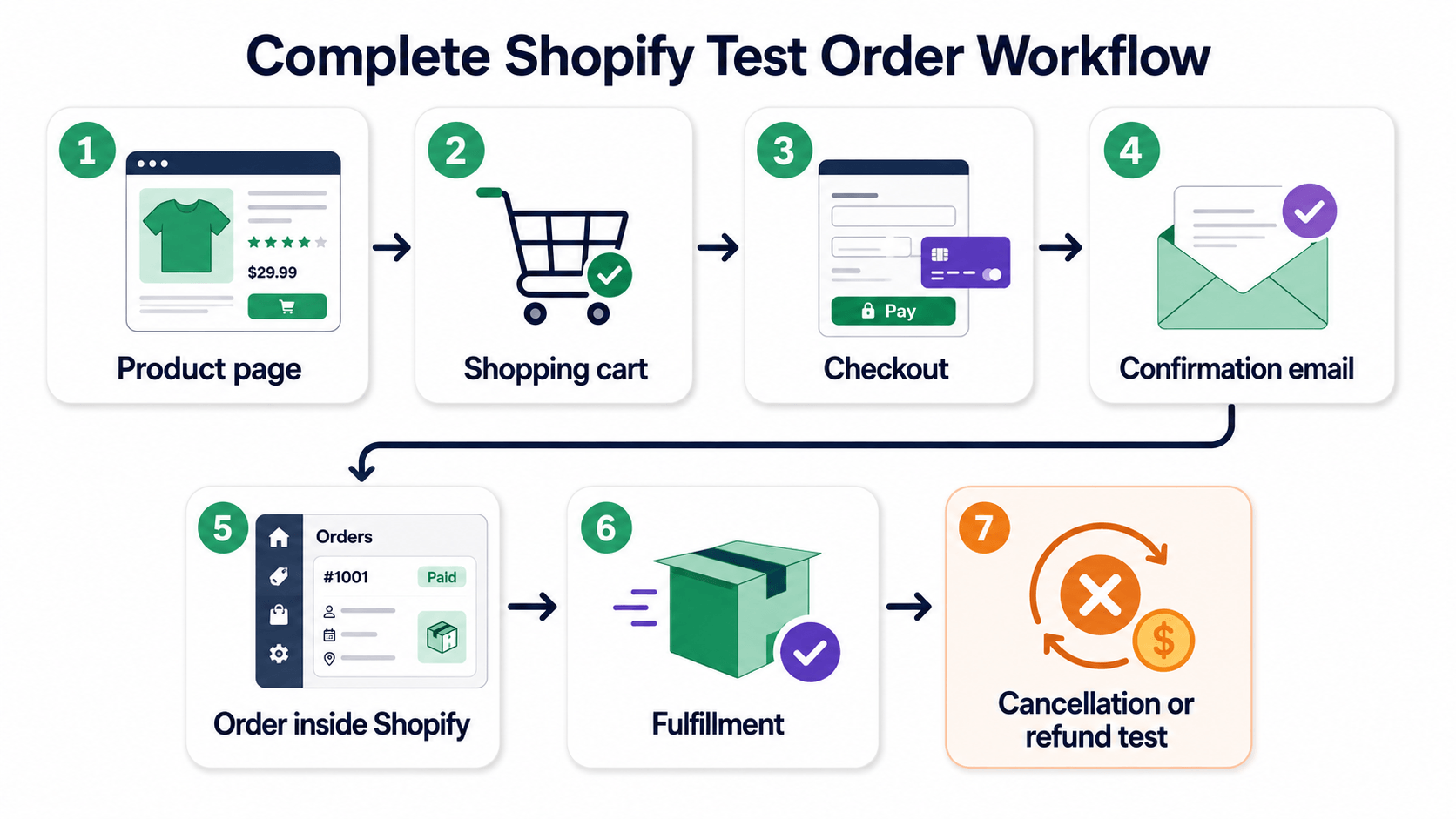
Traffic cannot rescue an unclear product or broken buying experience. Before promotion, complete the Shopify store launch checklist. Test products, variants, inventory, payment, tax, shipping, policies, email, mobile behavior, fulfillment, support, and analytics.
Ask someone in the target audience to find a product, explain what it does, choose an option, estimate the delivered price, and complete a test checkout without coaching. Record every question and hesitation. Those observations are often more valuable than another decorative homepage section.
If your storefront began with Shopify’s AI tools, use the Shopify AI Store Builder review to identify the product, content, navigation, operational, and testing work that still requires manual attention before promotion.
Define the First-Sale Offer
A first-sale offer is the complete reason a particular customer should purchase now. It includes the product, intended result, price, proof, delivery, returns, and the next action. Write it in one sentence before choosing a marketing channel.
Offer formula: For [specific customer], this [product] helps with [specific job or desire] through [meaningful difference], for [price and delivery terms], supported by [relevant proof or policy].
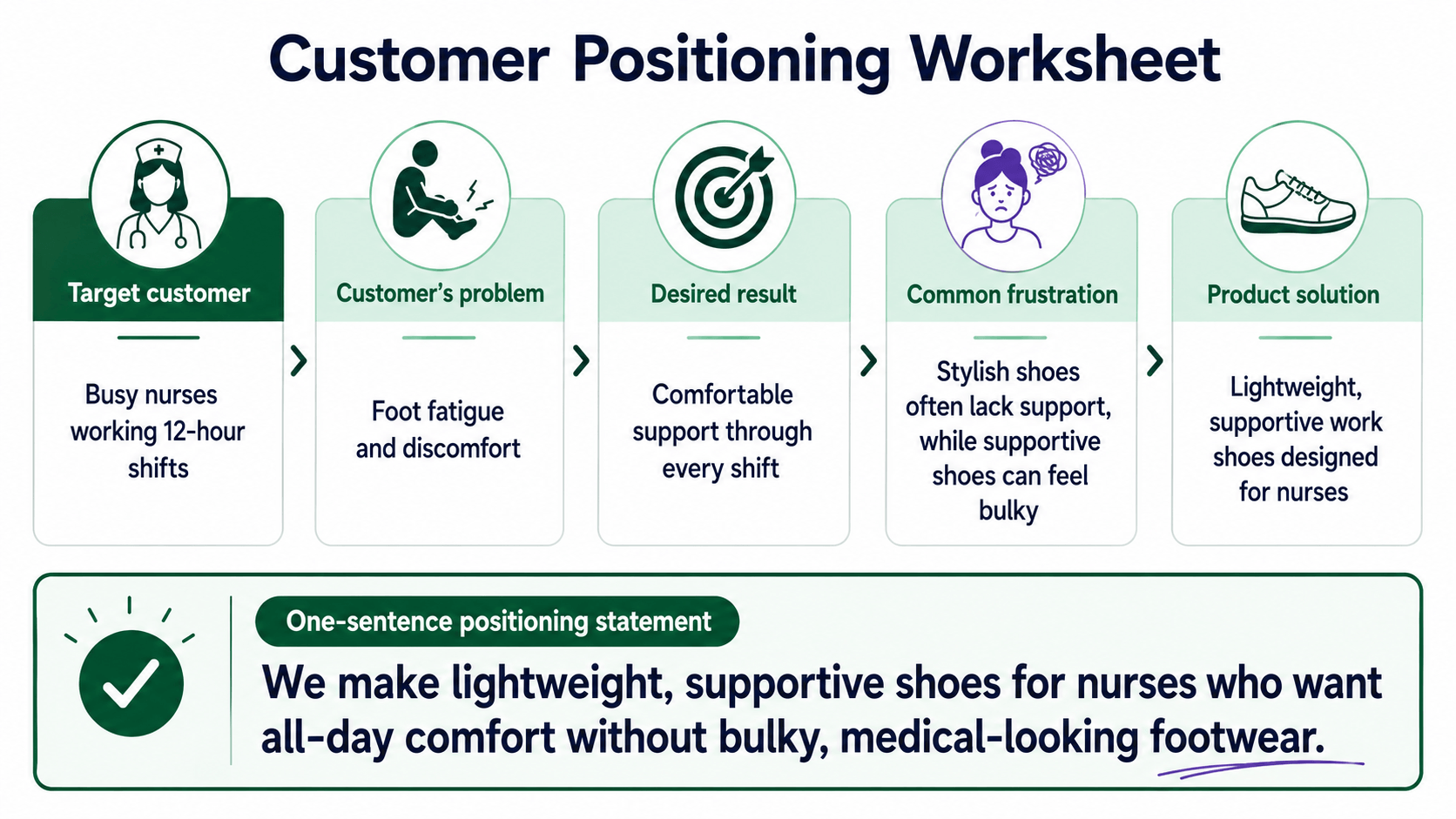
If you cannot complete the sentence without vague words, revisit the customer and product. The Shopify product-selection guide explains how to validate demand, margin, sourcing, shipping, and differentiation before expanding the catalog.
If you are deciding between an independent store and an established marketplace, the Shopify vs Etsy comparison explains the differences in traffic, control, branding, fees, product rules, and customer ownership.
If the offer is a download, template, ebook, course, or other digital product, follow my guide to selling digital products on Shopify to improve the offer, pricing, previews, product page, delivery experience, and launch preparation.
1. Start With People Who Already Know You
Warm contacts can provide the fastest, honest feedback because you already have a communication channel. Share the store with friends, family, colleagues, existing followers, past clients, or community members who actually fit the customer. Ask them to forward it only to someone relevant.
Do not pressure people to buy or ask for a positive review. Give them a clear description, link, and invitation to report confusion. A discounted test order can be useful when it is disclosed honestly, and the customer can still provide independent feedback.
2. Participate in Relevant Communities
Find communities where the intended customer already discusses the problem: niche forums, local groups, professional associations, hobby communities, subreddits, Facebook Groups, Discord servers, or in-person events. Read the promotion rules before sharing anything.
Contribute useful answers, show the product when it directly solves the question, and disclose your relationship. Dropping the same link into unrelated discussions can damage trust and get the account removed. The goal is relevance, not the largest possible audience.
3. Create Demonstration Content
Create short videos, photos, articles, comparisons, tutorials, or live demonstrations that answer the questions someone asks before buying. Show scale, setup, fit, texture, results, limitations, care, and real use. Original product evidence is more persuasive than repeating a supplier description.
- Show the problem and the product being used to address it.
- Compare options honestly and identify who should not buy.
- Answer the most common shipping, sizing, compatibility, or care question.
- Turn one full demonstration into shorter platform-specific clips.
- Link to the exact product or collection shown instead of the homepage.
4. Build Search Visibility
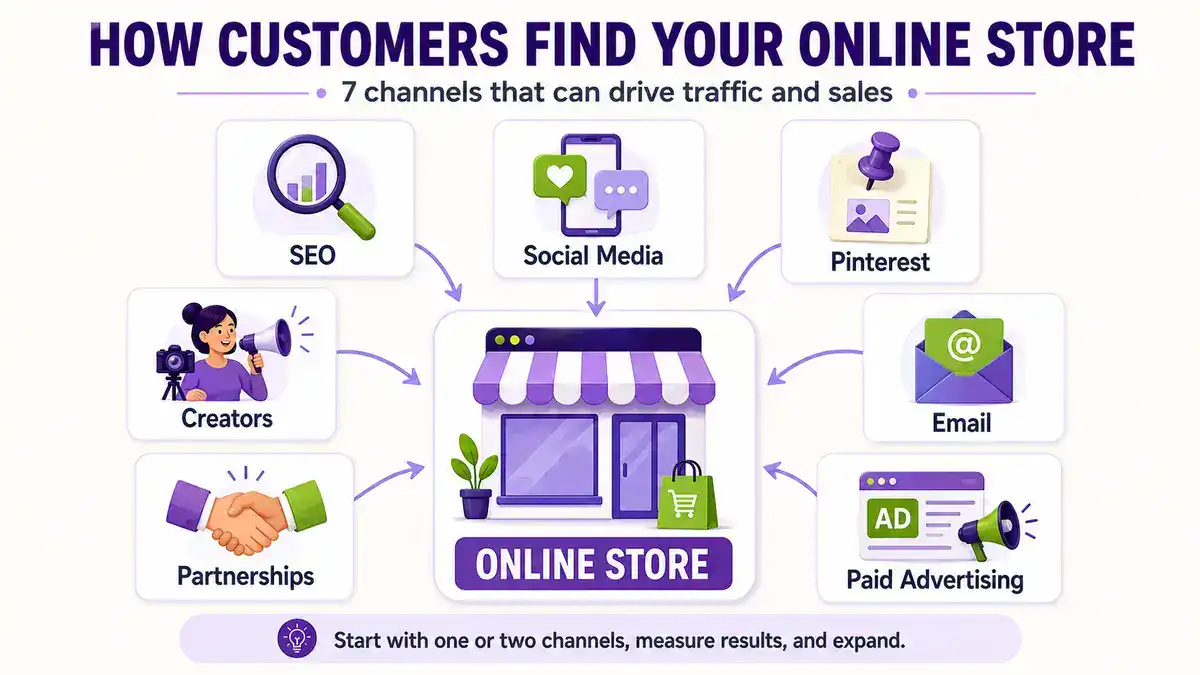
Search traffic usually takes longer than warm outreach, but it can compound. Create distinct product, collection, comparison, and informational pages around the searches customers use. Match each page to one job rather than forcing the same broad keyword onto every URL.
Use the Shopify SEO guide to improve titles, descriptions, product copy, collections, internal links, images, sitemap submission, and Search Console tracking. Avoid publishing dozens of generic articles before the pages nearest to a purchase are complete.
If your product suits visual discovery, use my Shopify Pinterest guide to connect the catalog, create useful Product Pins, and measure whether Pinterest visitors move toward checkout.
5. Collect Email Permission Before and After Launch
An email list gives interested people a direct way to hear about the launch, restock, demonstration, or useful guide. Offer a relevant reason to subscribe, state what they will receive, and collect permission according to applicable rules. A giveaway can attract low-intent entries when the prize is unrelated to the product.
For a simple launch sequence, send the problem and story, show the product and proof, answer the main objection, announce availability, and follow with a final reminder only when a real deadline exists. Test every link and mobile layout before sending.
6. Use a Clear, Honest Launch Incentive
An incentive can reduce hesitation, but it must fit the economics. Options include a limited introductory price, free-shipping threshold, useful bundle, small gift, or early-access benefit. Do not manufacture a countdown or claim limited inventory when neither is true.
Calculate contribution after the discount, payment expense, product cost, shipping subsidy, expected returns, and marketing. A first order that creates a loss is not automatically a success. Record why the incentive exists and what must happen for it to continue.
7. Work With Small Creators and Partners
A small creator with a trusted, relevant audience can be more useful than a large account with weak fit. Build a list based on audience, content quality, engagement, values, location, and product use—not follower count alone.
Offer a sample, paid collaboration, affiliate relationship, bundle, event, newsletter exchange, or co-created demonstration with clear terms. Require truthful opinions and proper disclosure. Give every partner a tagged link or code so the result can be measured without overstating attribution.
8. Test Paid Advertising Carefully
Shopify’s current first-sale guide recommends starting paid tests with a limited budget while learning one platform. The exact amount should come from your finances and acceptable loss, not a universal rule.
Choose the channel where the target customer and buying intent are present. Define the offer, audience, conversion event, daily and total budget, test duration, creative, landing page, and stop rule. Confirm tracking with a test order before trusting the dashboard.
- Use one hero product or focused collection.
- Send the click to a page that matches the advertisement.
- Create several meaningful creative variations.
- Do not scale from clicks alone; evaluate qualified behavior and contribution.
- Pause when tracking is broken, inventory is unavailable, or the loss limit is reached.
Make the Product Page Ready to Convert
If the page is clear but the offer still receives little interest, reassess the product and customer match before buying more traffic. My Shopify product-ideas guide includes 30 possibilities and a validation framework for testing demand, differentiation, margin, and fulfillment.
Product images should answer the questions a customer cannot resolve by reading the description alone. My Shopify product-photography guide shows how to photograph angles, details, scale, and real-world use while keeping the gallery consistent and fast-loading.
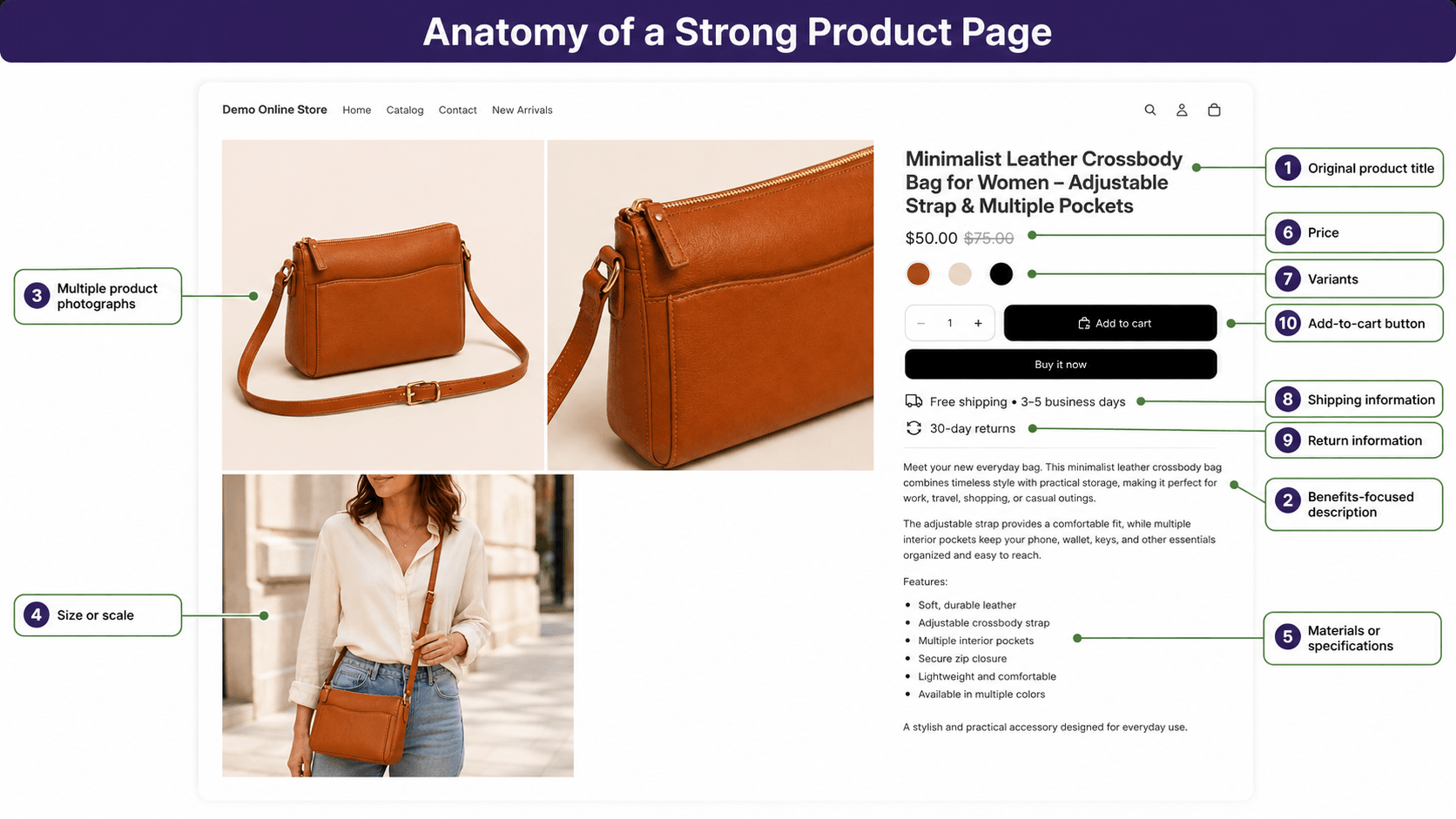
The product page must answer the questions created by the advertisement, search result, recommendation, or social post. A visitor should understand what the product is, who it is for, what changes after using it, what is included, what it costs, when it arrives, and what happens if it is not a fit.
- Use an accurate product title and opening image that match the traffic message.
- Show original images or demonstrations from the angles needed to decide.
- Explain size, materials, compatibility, care, ingredients, contents, or limitations where relevant.
- State price, variant differences, availability, delivery estimate, shipping cost logic, and return policy.
- Use legitimate proof with permission; never fabricate reviews, customer counts, or scarcity.
- Keep the add-to-cart action visible and test every variant on a phone.
Browse the best Shopify store examples to see how successful stores communicate benefits, organize products, use photography, answer objections, and guide customers toward the next action.
Do not hide an important limitation in a collapsed section or depend on a visitor reading the entire policy page. Clear expectations may reduce some clicks, but they also reduce wrong-fit orders, avoidable support, and preventable returns.
Once the product page and checkout pass these checks, continue building with Shopify and send each first-sale campaign to the exact product or collection page that matches its message.
Know the Economics Before Buying Traffic
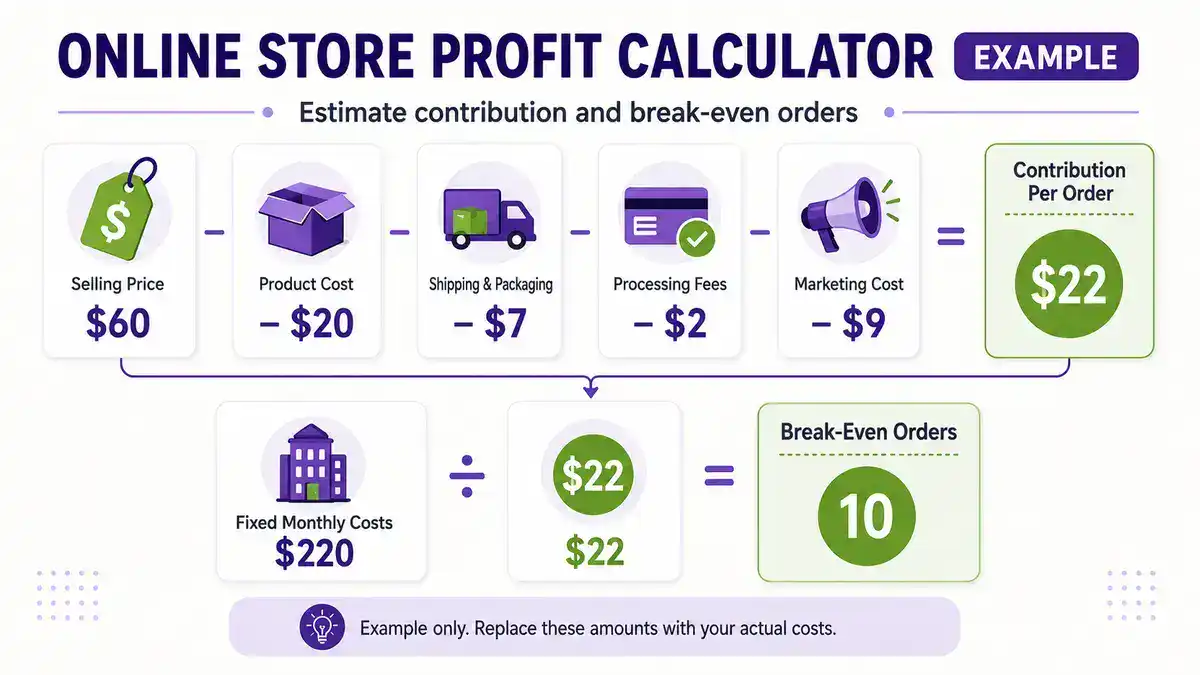
Revenue from the first order is not the same as profit. Calculate the money left after product cost, packaging, payment expense, shipping subsidy, discount, expected returns, platform and app costs, and acquisition. Use conservative assumptions until real orders replace estimates.
Use the Shopify pricing guide to account for the subscription, payment processing, transaction fees, apps, themes, and other platform expenses. If you use made-to-order fulfillment, the Shopify print-on-demand guide explains how production, shipping, replacements, returns, and provider charges affect each order.
Contribution before overhead: collected revenue − product cost − packaging − payment expense − shipping subsidy − discount − expected return/refund cost − variable fulfillment expense − acquisition cost.
If an average first order leaves $18 before advertising, paying $30 to acquire it creates a $12 shortfall before fixed overhead. That may be an intentional test, but it should not be confused with a sustainable result. Repeat purchase can improve lifetime economics only when actual customer behavior supports the assumption.
Use a Simple Testing Log
A written log prevents a new store from changing the price, audience, page, creative, and channel at the same time. For each test, record the question, the one main change, start and end dates, audience, channel, budget, traffic quality, funnel events, customer feedback, result, and next decision.
| Field | Example |
|---|---|
| Question | Does a demonstration answer the main compatibility objection? |
| Change | Add one original 30-second use video above the details |
| Audience | Qualified visitors from the same source and device mix |
| Primary measure | Product-view-to-cart behavior plus direct feedback |
| Stop rule | End at the planned date or spending limit |
| Decision | Keep, revise, or remove based on evidence and risk |
Small samples are noisy. Do not declare a universal winner from one order or a handful of visits. Use qualitative evidence to find problems early, then collect enough comparable behavior to support a larger decision.
Diagnose Why Visitors Are Not Buying
| Observed Behavior | Possible Issue | Next Check |
|---|---|---|
| Few qualified visits | Weak distribution or audience mismatch | Channel, targeting, message, and outreach volume |
| Visits but few product views | Homepage or landing-page mismatch | Offer clarity, navigation, mobile layout, and speed |
| Product views but few carts | Product, price, proof, or information problem | Research, images, description, reviews, shipping, and fit |
| Carts but few checkouts | Unexpected cost or cart friction | Shipping estimate, discount, cart errors, and trust |
| Checkouts but no purchases | Payment, delivery, policy, or technical issue | Test order, payment methods, taxes, shipping, and errors |
| Purchases but no profit | Weak unit economics | Price, product cost, returns, discounts, shipping, and acquisition cost |
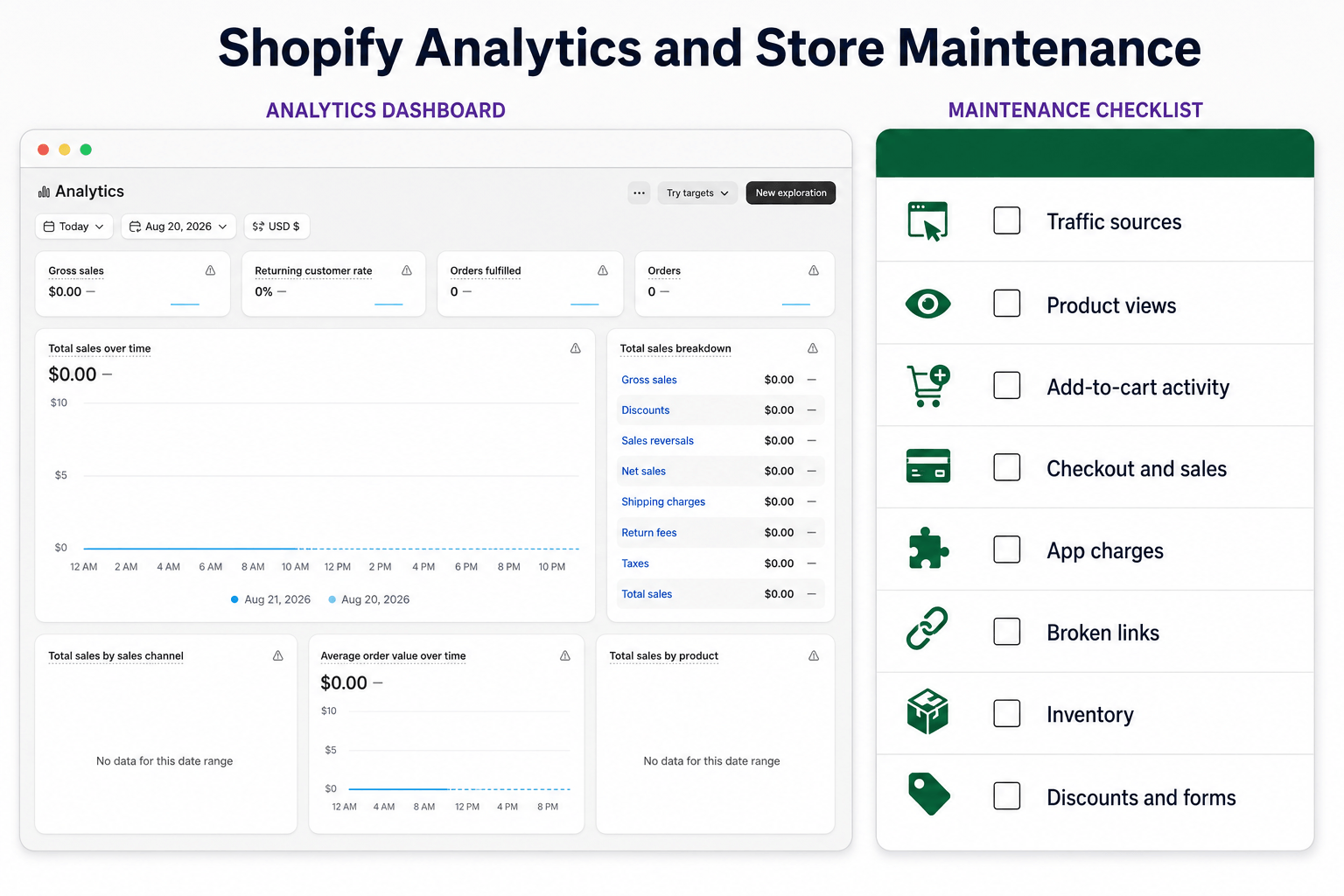
Shopify’s customer-acquisition guide emphasizes measuring channels instead of treating all traffic as equal. Look at behavior by source and device, then investigate the first important drop-off with customer evidence.
A 30-Day First-Sale Action Plan
| Week | Primary Goal | Actions |
|---|---|---|
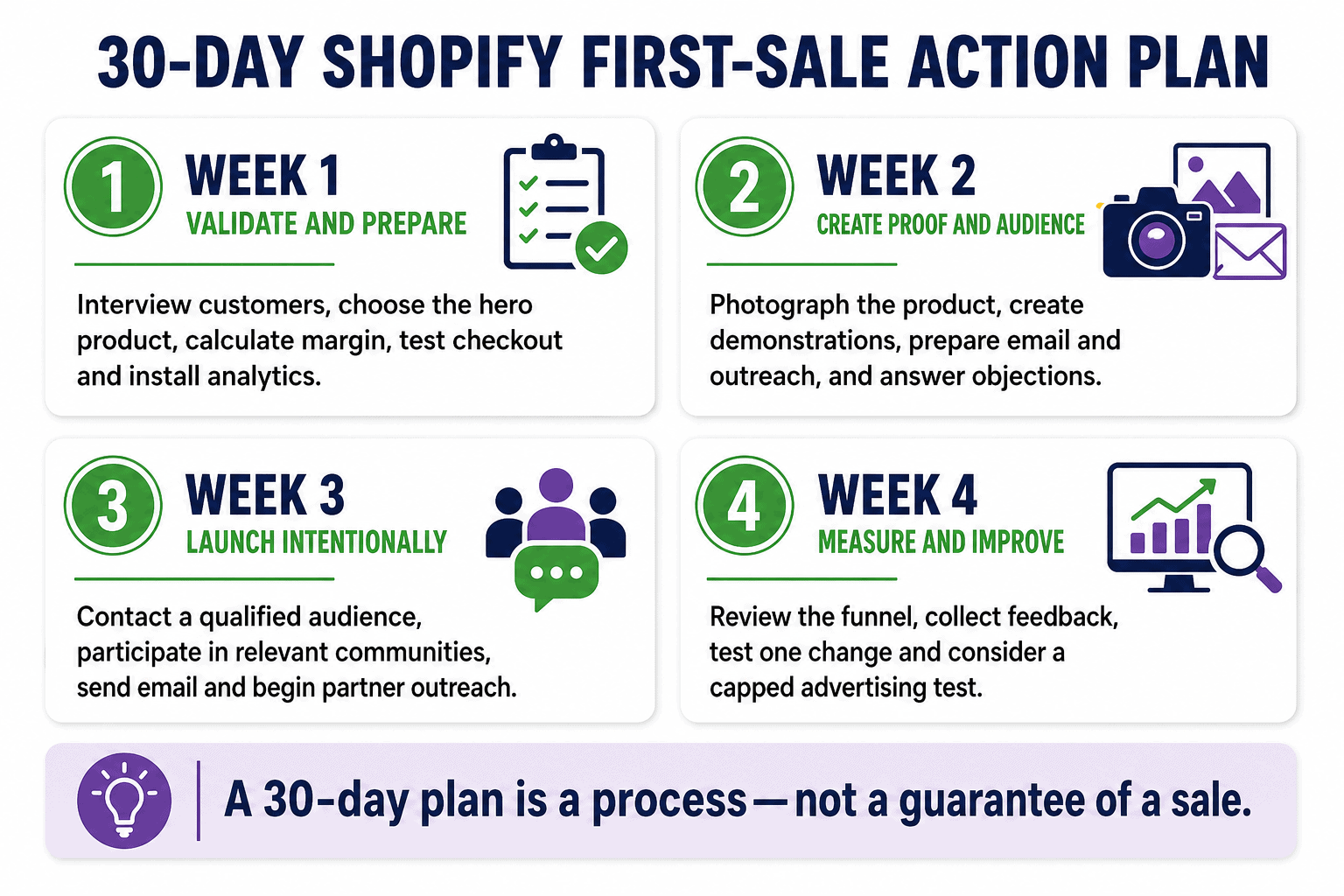
| Week 1 | Validate and prepare | Interview customers, choose hero product, calculate margin, test mobile checkout, install analytics |
| Week 2 | Create proof and audience | Photograph product, make demonstrations, build email page, prepare outreach, fix objections |
| Week 3 | Launch intentionally | Contact qualified warm audience, contribute to relevant communities, send email, begin partner outreach |
| Week 4 | Measure and improve | Review funnel, interview visitors, test one change, consider a capped paid test, document learnings |
The plan is a sequence, not a promise that a sale will occur within 30 days. Higher-priced or unfamiliar products may require longer trust building. Do not increase activity merely to hit a date if the product, fulfillment, or economics remain unproven.
Common First-Sale Mistakes
- Sending paid traffic before completing a test order
- Targeting everyone instead of one useful customer segment
- Changing the theme repeatedly instead of talking with customers
- Copying supplier descriptions and using only generic mockups
- Posting links where promotion is prohibited or irrelevant
- Discounting without calculating the complete contribution
- Celebrating revenue without checking fulfillment and customer satisfaction
- Judging a channel after too little qualified data or ignoring a clear stop rule
Review the broader Shopify mistakes guide before investing more in traffic. Fix problems that can mislead, block, delay, or mishandle a purchase first.
If your first-sale campaign takes place during BFCM, use my Shopify Black Friday checklist to coordinate the offer, audience, inventory, checkout, support, and fulfillment plan.
Frequently Asked Questions
How long does it take to get the first Shopify sale?
There is no fixed timeline. A relevant offer shown to an existing audience may sell quickly, while a higher-priced or unfamiliar product may require weeks or months of research, traffic, and trust building.
Why is my Shopify store getting traffic but no sales?
Possible causes include low-quality traffic, weak product-market fit, unclear value, price, missing proof, unexpected shipping, mobile friction, or checkout errors. Segment the funnel by source and test the first meaningful drop-off.
Can I get my first sale without paid ads?
Yes. Warm outreach, communities, search content, social demonstrations, email, local events, partnerships, referrals, and direct sales can generate customers without ad spend. They still require time and a relevant offer.
How much should I spend on ads?
Spend only an amount the business can afford to lose, and that is large enough to test a defined hypothesis. Set a total limit and stop rule before starting. Do not borrow or risk essential funds to chase a first order.
Should I offer a discount for the first sale?
A discount can help when it is honest, and the contribution remains acceptable. A useful bundle, free-shipping threshold, or added service may preserve value better than a large percentage discount.
Do friends and family count as a first sale?
It counts as an order and can test operations, but it may not validate demand from an independent customer. Record the relationship and continue testing with the intended market.
What should I do after the first sale?
Fulfill it accurately, communicate clearly, confirm satisfaction, calculate the actual contribution, ask for honest feedback, document the source, and improve any friction before increasing traffic.
Is Shopify good for a new ecommerce business?
Shopify can be a strong option for sellers who want hosted ecommerce, product management, checkout, and integrations in one system. Read the complete Shopify review to evaluate its costs and tradeoffs.
If you have not chosen your ecommerce platform yet, my Shopify vs WooCommerce comparison explains how their setup, costs, checkout, control, maintenance, and technical requirements differ.
For a broader look at ecommerce, publishing, SEO, customization, ownership, and maintenance, read my Shopify vs WordPress comparison.
If your store uses supplier-direct fulfillment, review my Shopify dropshipping guide for help choosing suppliers, calculating realistic margins, building product pages, and preparing the order workflow before promoting the store.
Final Verdict
The first Shopify sale is earned by combining a worthwhile offer, a trustworthy store, qualified traffic, and patient measurement. Start close to the customer, prove the buying and fulfillment process, and add paid reach only when the store and economics are ready.
Start your Shopify free trial, build one complete offer, and use the 30-day plan to collect evidence. Do not measure success by the order alone; measure whether the customer was satisfied, the promise was fulfilled, and the business learned something repeatable.
If your first-sale plan centers on a single flagship item, use my one-product Shopify store guide to strengthen the positioning, product page, profit assumptions, and conversion path before driving traffic.